


Some enjoy blooming flowers, while others suffer from sneezing. Some have pets waiting for them at home, while others can’t get a cat because of allergies. Many people suffer from sneezing, watery eyes, or nasal congestion. Doctors typically call this condition allergic rhinitis. This allergic reaction can be triggered by animal dander, pollen, mold, or even insects. But don’t despair. You can improve your condition. It’s important to see a doctor immediately, address allergic rhinitis symptoms, take antiallergic medications, or undergo immunotherapy. So, let’s talk about this condition, its causes, symptoms, and treatment options.
What Is Allergic Rhinitis?
This condition is an allergic reaction to allergens—tiny particles in the air. You inhale them through your nose or mouth, and your body reacts by releasing histamine, a natural chemical. Doctors actually call this condition hay fever. Despite the name, most people don’t experience a fever.
What Are the Causes of Allergic Rhinitis?
The most common allergens include:
- Mold spores.
- Pet dander (tiny flakes of dead skin cells).
- Cockroach feces and saliva.
- Pollen from trees, weeds, and plants.
- Dust mites.
Naturally, only a doctor can determine the exact cause. But this article can be helpful.
Risk Factors for Developing Hay Fever
If you have a parent or close relative with allergies, you have a higher risk of developing them. People who suffer from eczema or asthma are also more likely to develop hay fever.
Allergic Rhinitis Signs and Symptoms
People with hay fever suffer from sneezing, congestion, and irritation of the nose, throat, mouth, and eyes. It’s important not to confuse this condition with the common cold! Hay fever is not contagious. It’s also important to note that not all rhinitis is allergic. Many patients suffer from non-allergic rhinitis, and the symptoms are similar. Common illness is not caused by allergens or histamine release, but by inflammation. A doctor will determine the exact cause and treatment options, so be sure to schedule an examination.
How to Distinguish Hay Fever from a Cold?
The symptoms of a cold and hay fever are pretty similar, so it can sometimes be difficult for a person to distinguish between the two. Only a qualified doctor can do this. Most likely, itching, redness, and watery eyes often indicate an allergy. These symptoms are less familiar with a cold. However, a cold often causes fever and muscle aches.
It’s also important to identify the trigger. If you experience symptoms after a change of seasons or the introduction of a new pet, it’s likely an allergic reaction. Allergies often occur at the same time of year and come on quickly. Colds are contagious and caused by viruses. If you’ve been in contact with someone with a cold and soon experience similar symptoms, you’re likely suffering from the same condition.
When Do People Most Often Suffer from Allergic Rhinitis?
There’s no specific season. Of course, seasonal allergies typically occur in spring, summer, and early fall. That’s when trees and weeds bloom, and pollen levels in the air are much higher. But pollen seasons can vary depending on your location. Perennial allergies can occur year-round. Cockroaches, dust mites, and animal dander cause them.
Diagnosis and Testing
First, your doctor will examine you, ask about your symptoms, and evaluate you for other medical conditions. They’ll pay particular attention to colds or asthma. A specialist will definitely conduct allergy testing.
An immunoglobulin E (IgE) allergy test measures antibodies to an allergen in a blood sample. This blood test can detect most types of allergies, including food allergies.
A skin test and/or intradermal test determines which allergens are causing your symptoms. A specialist applies a small sample of various allergens to your forearm or back, makes an incision, or pricks the skin with a needle. After 15-30 minutes, if the affected area turns red, itches, and becomes inflamed, this indicates an allergy to a specific allergen. In intradermal testing, an allergist injects the allergen under the skin.
Allergic Rhinitis Treatment
A specialist will prescribe antiallergic medications. These will help relieve symptoms and enable you to live actively and without problems with hay fever. These medications are available as liquids, eye drops, tablets, nasal sprays, and injections.
Antihistamines block histamine, which is released during an allergic reaction. They are available with or without a prescription. They come in tablet, inhaler, liquid, eye drop, and nasal spray forms.
Fexofenadine, cetirizine, loratadine, and levocetirizine are popular. Note that they can sometimes cause drowsiness, so avoid driving or drinking alcohol while taking these medications. Decongestants relieve nasal and sinus congestion. Take them as tablets, liquids, or a nasal spray.
Immunotherapy helps your body learn to tolerate allergens. Your doctor gives you a series of injections containing a small amount of the allergen. With each injection, the specialist gradually increases the amount of the allergen. Over time, your immune system develops immunity to the allergen and stops reacting to it, and your unpleasant symptoms subside. Corticosteroid nasal sprays reduce inflammation and relieve hay fever symptoms.
Leukotriene inhibitors are also sometimes effective. Side effects include involuntary muscle movements and skin rash. Some patients experience mood changes.
Decongestants can sometimes increase blood pressure and cause irritability, headaches, and insomnia. A doctor can help adjust treatment.
Most people experience relief from hay fever within a few days when taking medication. However, they should be taken continuously as long as allergens, such as pollen, are present in the air. Without medication, some people may experience symptoms for weeks or months.
Prognosis and Outlook
Allergic rhinitis can cause severe discomfort, but it typically doesn’t lead to serious health problems. Over-the-counter medications and lifestyle changes are usually sufficient to achieve improvement. It’s also worth noting that people with pollen allergies have a higher risk of ear and sinus infections. Hay fever can also make it difficult to get a good night’s sleep, so you may feel tired during the day. If you have asthma, allergic rhinitis can worsen its signs.
Allergic Rhinitis Self-Care
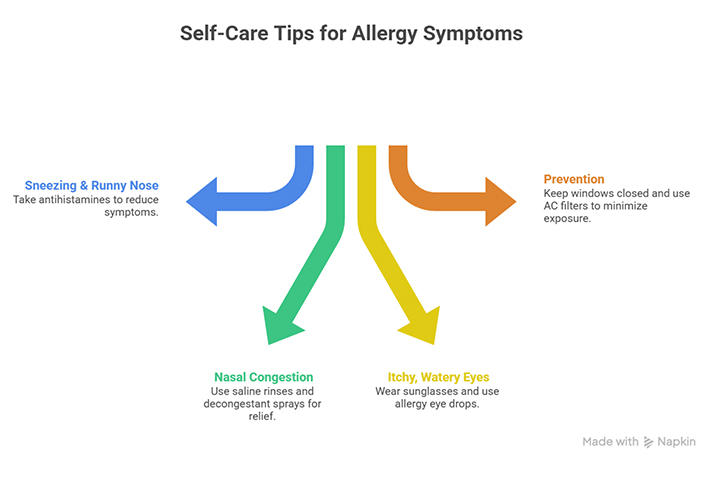
Unfortunately, hay fever cannot be prevented. However, you can live a whole life with allergies if you follow specific behavioral guidelines! Avoid irritants as much as possible. Avoid touching your face and rubbing your eyes or nose.
Close windows in your home and car in the spring, summer, and early fall, as pollen counts are particularly high during these periods. Put covers on your mattresses, box springs, and pillows to protect against dust mites. Use filters in your vacuum cleaner and air conditioner to reduce airborne allergens.
Keep pets off sofas and beds, and be sure to close doors to bedrooms you don’t want them in.
Wear a hat and sunglasses to protect your eyes from pollen when outdoors. Wash your hands frequently, especially after playing with pets. Change clothing as soon as you enter a room.
Conclusion
Living a vibrant and active life with allergies is entirely possible. An allergy specialist can help you manage your symptoms and regain control of your condition. Now you know when to call a doctor. We also recommend regular checkups to ensure prompt treatment. At Allergy & Asthma Associates of Southern California, our team of board-certified specialists has been serving patients in Orange County for over four decades. Trust your health to the professionals. Schedule a consultation!


