


Sometimes, especially in the cold season, you get nasal congestion. It might seem like a big deal. Unfortunately, even seemingly minor symptoms can’t be ignored. Your sinuses – cavities in the facial bones – become infected and fill with mucus. You might get a headache, feel pressure in your face, or develop purulent nasal discharge. This has a name: sinusitis. Nearly 30 million people in the United States get this condition each year. Let’s discuss when to seek medical help for sinusitis!
How Do You Know if You Have a Severe Sinus Infection?
Sinusitis symptoms are often similar to those of the common cold. Here’s how to figure it out. If you feel like you can’t cough up mucus from your nose, if you have a headache and a feeling of pressure in your face, if your runny nose is already bothering you, and especially if it’s green, you likely have sinusitis. Postnasal drip is also a sign of this, when mucus drips down the back of your throat. Bad breath and a fever are also common signs of this condition.
When Should You Definitely See a Doctor?
Yes, many sinus infections resolve on their own. Perhaps your condition is similar? But here’s when you should be wary. If you experience nasal congestion, headache, and facial pain for more than 7-10 days, consult a doctor. Are you feeling slightly better, only for the symptoms to return? This is also a reason to seek medical attention. Also, consider if you have a high fever for more than 3-4 days. People with diabetes or other conditions that weaken the immune system should be cautious in this case.
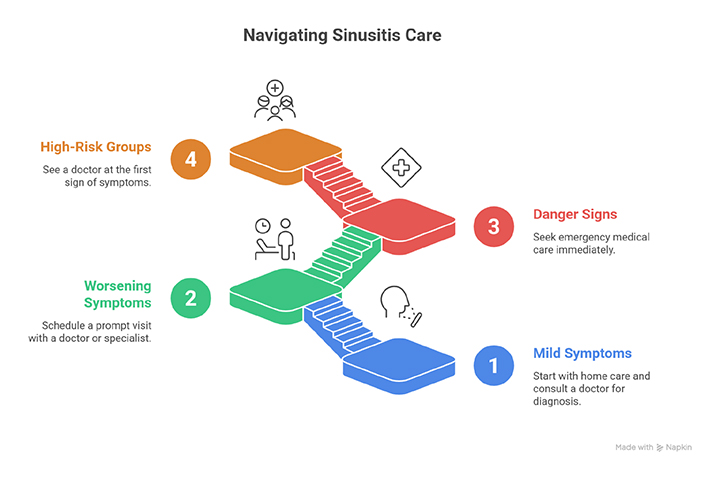
| Symptoms / Situation | What to Do |
|---|---|
| Mild cold-like symptoms (runny nose, congestion) for less than 10 days. | Start with home care (nasal rinses, rest), but consult a doctor for an accurate diagnosis. |
| Symptoms last over 10 days OR suddenly worsen (severe pain, high fever, thick green/yellow discharge). |
Schedule a prompt visit with your primary doctor or an ENT specialist. |
| Danger Signs: Severe headache, confusion, swelling/pain around the eyes, vision changes, neck stiffness. |
Seek emergency medical care immediately (go to the ER). |
| High-Risk Groups: Diabetes, asthma, weakened immune system, structural nasal issues. |
See a doctor at the first sign of symptoms for early evaluation and management. |
Diagnosis
Your doctor will typically evaluate your sinus problems and review your medical history. They will perform a physical examination to check the condition of your nasal passages. They will then order imaging tests if chronic or complicated cases are suspected. They will also collect samples for bacterial examination. If you’ve had more than 3 episodes of sinusitis in the past 6 months, your doctor will refer you to an otolaryngologist. Sometimes symptoms don’t improve with antibiotics. In that case, they’re most likely not caused by sinusitis, and you definitely need to get examined.
Sinus Infection Treatment
Let’s figure out how to treat this condition and whether it is even necessary.
Will Antibiotics Help?
Doctors typically don’t prescribe antibiotics for sinusitis. Viruses cause most sinusitis infections, so antibiotics aren’t necessary. 85% of such infections resolve efficiently within 2 weeks without antibiotics. However, antibiotics can be helpful if bacteria causes sinusitis. In such cases, your doctor may prescribe amoxicillin-clavulanate, amoxicillin, or a Z-Pak.
Symptoms still haven’t gone away? Then you need further testing. A specialist will likely take a swab from your nose. This will help determine precisely what’s causing the sinus infection. Unfortunately, it’s common practice to prescribe antibiotics even to patients with sinusitis who don’t need them. Sometimes, however, a person feels slightly better in the first few days after starting antibiotics, and the patient is happy with the relief of symptoms.
How to Treat Sinusitis at Home?
Take over-the-counter pain relievers like paracetamol or ibuprofen – as recommended by your doctor. Rinse your nose with saline solution. You can also use a saline nasal spray. Sometimes your doctor will prescribe over-the-counter decongestants like Mucinex D or pseudoephedrine. Some patients feel relief by applying a warm compress to their forehead and nose. You can also inhale steam from a hot shower or a bowl of water. Yes, all of these methods can help provide relief. However, these methods do not change the course of the infection.
Foods Can Worsen Sinus Problems
Certain dairy products, alcohol, and foods high in refined sugar can actually worsen inflammation in sensitive individuals. Be mindful of your diet, making sure it’s rich in healthy ingredients, and avoid unhealthy habits.
How Soon Will I Recover?
Acute sinusitis can last from a few days to 8 weeks. Chronic sinusitis, however, can last several months. Acute sinusitis often resolves on its own within 1 to 2 weeks, even without antibiotics.
Dangerous Complications of Sinusitis
Do you need to treat the condition? After all, 70% of people experience symptom improvement within 7 days, with or without antibiotics. But this is no reason to ignore the infection! Be sure to see a doctor. At the initial stage, your doctor may simply monitor the illness’s progression. But if a specialist suspects a bacterial infection, they will definitely prescribe treatment. Otherwise, the situation may worsen. This can lead to serious complications.
Complications include:
- Abscess near the brain
- Meningitis is an infection of the brain and spinal cord
- Sinus vein thrombosis, a blood clot in the veins near the brain
- Orbital cellulitis, an infection around the eyes
These conditions require immediate treatment, usually in a hospital. So, don’t ignore neck pain or stiffness, a severe headache, weakness, swelling around the eyes, confusion, difficulty moving your eyes, severe pain with movement, or vision changes! You should also be wary of any symptoms that resemble a stroke. However, such complications are rare, but this is no reason to ignore your condition and not see a doctor.
Sinus Infection Causes
Viral or bacterial infections are most often the cause of sinusitis. For example, a person might catch the flu or a cold and soon experience the unpleasant symptoms of sinusitis.
However, this condition can also be triggered by allergens. Dust, pollen, or animal dander can cause sinus inflammation in some people.
Sometimes, a deviated septum, nasal polyps, or other anatomical variations can lead to unpleasant nasal congestion and other symptoms. These can obstruct mucus drainage and contribute to inflammation.
Sinusitis can be associated with asthma or immune disorders. Allergic sinusitis is accompanied by constant sneezing and itchy eyes. At this point, the immune system overreacts to allergens, leading to sinus inflammation. People with allergic sinusitis experience nasal congestion, postnasal drip, facial pressure, and other symptoms. Our allergy specialists will help you understand the cause of your symptoms and alleviate them. We will likely order skin tests or blood tests. We will then analyze the information and prescribe medication or immunotherapy. Believe us, these unpleasant symptoms can be eliminated, and you can feel great again!
Risk Factors
You are at risk if you have frequent colds or respiratory infections, allergies or asthma, or a weakened immune system. Sinusitis can sometimes be caused by smoking or exposure to irritants, so avoid unhealthy habits and be mindful of your environment.
Conclusion
Is it difficult to breathe through your nose, do you constantly need to clear your throat, or do you suffer from toothaches or headaches? Do you have facial pain, especially in your cheekbones and eyebrows? Do you sometimes experience bad breath and fatigue? Could you have sinusitis? But what if allergens cause it? Our compassionate specialists will help identify the cause and prescribe the proper treatment for Sinus. Don’t delay. The sooner you seek help, the sooner you’ll feel better!


