

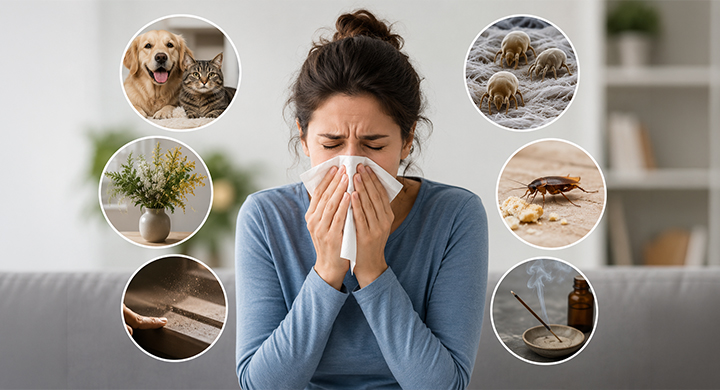
Are you dreading pollen season, experiencing unpredictable sneezing fits, o nasal congestion that just won’t go away? You’re far from alone. Allergies are one of the most common chronic health problems in the United States. However, many people unknowingly make everyday mistakes that worsen their allergy symptoms rather than improve them. Let’s look at the most common allergy-related mistakes, as well as allergy prevention and treatment tips to help you breathe easier this season.
Recognizing the Real Signs of Allergies
The first mistake is misinterpreting your own symptoms. A runny nose, itchy or watery eyes, wheezing, chronic cough, and difficulty breathing are classic signs of allergies. Unfortunately, they are often mistaken for a lingering cold or sinusitis. Adults can also develop new allergies to pets, dust, or pollen later in life, even after years of being asymptomatic. Do you reach for antibiotics every spring because of a “sinusitis” that never goes away? It may actually be an untreated pollen allergy. Accurate diagnosis through allergy testing is the foundation of effective allergy treatment, and it’s the one step most people skip.
Mistake #1: Waiting Until Symptoms Start to Treat Them
Many allergy sufferers begin taking medications only when they’re already in severe distress. Antihistamines and nasal steroid sprays are much more effective if started two to three weeks before allergy season begins, giving the medication time to build up its protective effect before allergens peak. Don’t wait until symptoms have fully manifested. This is one of the most common and easily corrected mistakes in allergy treatment.
Mistake #2: Guessing at Allergy Triggers Instead of Testing
Without proper testing, most people simply guess what’s troubling them, and through trial and error, patients try various over-the-counter remedies. This wastes time and money and often overlooks the true allergens. Our research center in Southern California offers state-of-the-art allergy diagnostic testing, ensuring your treatment plan is evidence-based.
Mistake #3: Misusing Nasal Sprays and Medications
Nasal sprays are one of the most effective allergy treatments, but proper application technique is essential. A common mistake is spraying directly into the nose instead of aiming the spray outward toward the sinuses. This method reduces effectiveness and can cause irritation. Overuse of over-the-counter decongestant sprays over several days can also have the opposite effect, worsening congestion. The table below shows the most common medication errors we see in our practice.
| Common Mistake | Why It’s a Problem | Better Allergy Management Tip |
| Starting medication only after symptoms appear | Antihistamines and nasal sprays need time to build a protective effect | Begin treatment 2–3 weeks before your allergy season starts |
| Spraying nasal medication straight upward | Irritates the septum and reduces how much medication reaches the sinuses | Angle the spray outward, toward the outer corner of the eye |
| Overusing OTC decongestant sprays | Can cause rebound congestion that is worse than the original symptoms | Limit decongestant sprays to 3 days; ask about steroid sprays for longer-term use |
| Trying random OTC products without testing | Treats the wrong symptoms and delays real relief | Get allergy tested to confirm your specific triggers |
| Skipping doses or forgetting medication | Breaks the steady protection allergy medication is designed to provide | Pair doses with an existing habit, like brushing your teeth |
Mistake #4: Ignoring Everyday Allergy Triggers at Home and Outdoors
Environmental habits play a significant role in the severity of symptoms. Avoid leaving windows open during pollen season, exercising outdoors in the morning when pollen counts are highest, wearing gardening clothes indoors, and keeping dusty items in the bedroom. These can hinder allergy treatment. Small, consistent changes to your daily routine are often more effective than any single medication.
Allergy Prevention Tips by Trigger
Allergens vary greatly from person to person, so allergy prevention tips are most effective when they are tailored to your specific allergen. Use the reference chart below as a starting point, and remember that a personalized plan from an allergist will always be more accurate than general recommendations.
| Allergy Trigger | Typical Signs of Allergies | Prevention Tip |
| Seasonal pollen (trees, grass, weeds) | Sneezing, itchy/watery eyes, runny nose | Keep windows closed, run AC on recirculate, shower before bed |
| Dust mites | Congestion that is worse in the morning, chronic cough | Wash bedding weekly in hot water; use a HEPA filter |
| Pet dander | Itchy eyes, wheezing, skin reactions after contact | Keep pets off furniture and out of the bedroom |
| Mold (indoor/outdoor) | Sinus pressure, coughing, worsens in damp weather | Fix leaks promptly; use a dehumidifier in damp rooms |
| Food allergens (peanuts, tree nuts, egg, milk, etc.) | Hives, swelling, digestive upset, or anaphylaxis | Confirm true allergies with testing; ask about oral immunotherapy |
Mistake #5: Relying Only on Over-the-Counter Products
Over-the-counter antihistamines and sprays are a reasonable first step, but they are not a complete allergy treatment strategy for everyone. If symptoms persist despite consistent use of over-the-counter remedies, this is a sign that a more targeted approach is needed. Oral immunotherapy may be helpful for seasonal allergies, food allergies, skin allergies, and sinus allergies.
Building an Allergy Management Routine That Actually Works
- Get medication proactively before your personal allergy season begins.
- Learn to test first—accurate diagnosis is the foundation of every effective allergy management plan.
- Start with the correct nasal spray technique so your medication actually reaches the sinuses.
- Reduce exposure at home: HEPA filters, closed windows during peak pollen, and regular cleaning.
- Revisit your plan with an allergist if OTC products stop being enough.
When to See a Specialist
Are allergy symptoms interfering with your sleep, work, or daily life? Or are you forced to take antibiotics or over-the-counter medications without long-term relief? Then it’s time to see a specialist. Allergy & Asthma Associates of Southern California has been providing exceptional care to children and adults with allergies and asthma since 1980, led by Dr. Warner W. Carr and a team that includes Dr. Christine Y. Lee-Kim, Dr. Vinay Mehta, Cheryl Carr, FNP-C, and Craig Woo, PA. We proudly serve Laguna Niguel and the surrounding Orange County communities, including Aliso Viejo, Coto de Caza, Dana Point, Ladera Ranch, Laguna Beach, Laguna Hills, Lake Forest, Newport Beach, Rancho Santa Margarita, San Juan Capistrano, and Talega.
Schedule Your Allergy Testing Today
Avoiding these common allergy treatment mistakes is possible. Start with an accurate diagnosis and a personalized treatment plan. Call Allergy & Asthma Associates of Southern California at (949) 364-2900 to schedule an appointment with one of our allergists and asthma specialists and take the first step toward long-term symptom relief.


